
{ Skip to main content

Perimenopause Care North Port Florida

PerimenopausePerimenopause North Port Florida, Perimenopause, North, Port, Florida

YOUR QUESTIONS ANSWERED

“I don’t feel like myself anymore.”

If you’ve said this recently, you’re not alone and you’re not imagining the changes happening in your body.

Perimenopause is the transition leading up to menopause. It can begin years before your final menstrual period, often during your 40s and sometimes earlier. For me I was 35 when I was driving down I75, which Ive done hundreds of times.  For some reason I was nervous. I was sweating from every orifice in my body.  What would come next Id never have guessed.

And here’s one of the most important things to understand:

Perimenopause is not simply a state of “low estrogen.”

Your hormones are changing and sometimes changing dramatically.

Estrogen can rise, fall, surge and fall again. Progesterone production may become less consistent as ovulation becomes less predictable. Testosterone and other hormones may change as well.

That is why one month you may feel fantastic and the next month wonder what happened to you.

At House of Hormones & Weight Loss, we look beyond a single laboratory number. We consider your symptoms, menstrual pattern, medical history, lifestyle, medications, laboratory results and how you actually feel.

What is perimenopause?

what is perimenopause north port floridaPerimenopause is the hormonal transition between your reproductive years and menopause.


During this transition, ovarian function becomes less predictable. Ovulation may not occur every month, menstrual cycles can change and estrogen levels can fluctuate significantly.

Eventually, you reach menopause, which is defined as 12 consecutive months without a menstrual period when there is no other medical explanation.

I am text block. Click edit button to change this text. Lorem ipsum dolor sit amet, consectetur adipiscing elit. Ut elit tellus, luctus nec ullamcorper mattis, pulvinar dapibus leo.

What are the symptoms of perimenopause? I call it the “the hormonal whiplash era!”

what are the symptoms of perimenopause

Perimenopause can look very different from woman to woman which is one reason it goes often unnoticed and untreated.

Symptoms may include:

  • Hot flashes
  • Night sweats
  • Difficulty falling asleep
  • Waking between 2–4 a.m.
  • Fatigue
  • Brain fog
  • Difficulty concentrating
  • Memory changes
  • Anxiety
  • Irritability
  • Mood changes
  • Feeling overwhelmed more easily
  • Depression
  • Heart palpitations
  • Headaches or migraines
  • Breast tenderness
  • Bloating
  • Changes in bowel habits
  • Weight gain
  • Increased abdominal fat
  • Loss of muscle
  • Joint or muscle aches
  • Decreased motivation
  • Lower libido
  • Vaginal dryness
  • Painful intercourse
  • Urinary symptoms
  • Changes in menstrual frequency
  • Heavier or lighter periods
  • Spotting or irregular bleeding

You don’t need to have hot flashes to be experiencing perimenopause but this is often the most frequent notable symptom.

Why do my symptoms change so much from week to week?

why do my symptoms change so much from week to weekBecause your hormones can change from week to week- and day to day!

During perimenopause, estrogen production can be highly variable. You may experience periods of relatively high estrogen followed by significant drops.

Progesterone can also become less predictable because progesterone is primarily produced after ovulation. As ovulation becomes less consistent, progesterone exposure can change.
This hormonal variability is one reason symptoms may seem unpredictable.

You may sleep beautifully for several weeks and suddenly begin waking every night. Your breasts may become tender. Your period may arrive early. Your anxiety may increase. Hot flashes may disappear and then return.

Perimenopause is a transition—not a straight line. Chaotic shit show on full display similar to the Hunger Games. Reverse Puberty? The Rage and Refrigeration era? Ok you get the point.

My estrogen level was normal. How can I be perimenopausal?

my estrogen level was normal. how can i be perimenopausalThis is one of the most common questions we hear.
A single estradiol level is a snapshot of one moment in time making this lab a moot point.

During perimenopause, estradiol can fluctuate considerably. A normal or even relatively high estradiol result does not necessarily mean you aren’t experiencing the menopausal transition.

This is why we don’t treat a laboratory number in isolation.

We treat the person sitting in front of us.

Your symptoms, cycle changes, medical history and laboratory findings all contribute to the bigger picture.

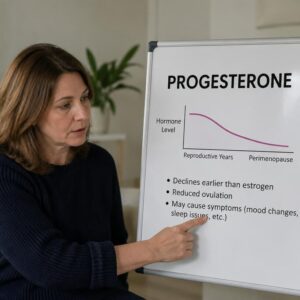
What happens to progesterone during perimenopause?

what happens to progesterone during perimenopauseProgesterone is produced primarily following ovulation.
As women move through perimenopause, ovulation can become less predictable. That means progesterone production may also become less consistent.

For appropriate patients, progesterone therapy may be considered as part of an individualized treatment plan.

Progesterone is also particularly important when systemic estrogen therapy is prescribed to a woman with an intact uterus because adequate endometrial protection is necessary.  Be warned if you miss a dose or two typically you may have uterine bleeding or spotting.

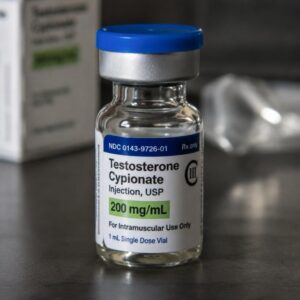
What about testosterone?

what about testosteroneWomen need testosterone too. Infect is my favorite hormone personally. Oh, the current of life (energy) it gives.
Testosterone plays physiological roles in women, and levels generally change with age. In carefully selected women, testosterone therapy may sometimes be considered

particularly for hypoactive sexual desire disorder after appropriate evaluation.

We evaluate testosterone in context rather than if every woman experiencing fatigue, weight gain or low libido needs testosterone.

When testosterone therapy is appropriate, dose and monitoring matter. More is not better.

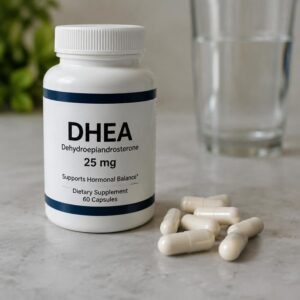
What is DHEA?

what is dheaDHEA is an adrenal hormone that serves as a precursor for other sex hormones.
DHEA-S can be measured in the blood when clinically appropriate. However, DHEA supplementation isn’t automatically necessary simply because someone is in perimenopause.  Optimizing your DHEA-S will be done if it is low.

Like other hormones, it should be considered in the context of your symptoms, history, medications and laboratory findings.

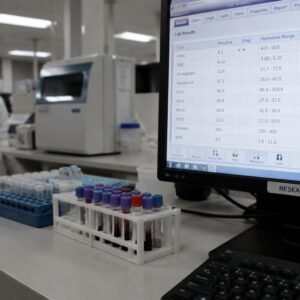
What labs do you monitor?

what labs do you monitorAt House of Hormones & Weight Loss, patients receiving hormone therapy are typically evaluated by laboratory testing approximately twice each year after you are feeling well, with additional testing when clinically indicated and more when you are starting.

Your individual panel may include:

  • Hormones
  • Estradiol
  • Progesterone when clinically useful
  • Total testosterone
  • Free testosterone
  • SHBG
  • DHEA-S
  • FSH and/or LH when clinically appropriate
  • Thyroid
  • TSH
  • Free T4
  • Free T3 and/or additional thyroid testing when indicated

General health and nutritional markers

  • CBC
  • Comprehensive metabolic panel
  • Vitamin D
  • Vitamin B12 and other nutritional markers when indicated

Additional testing may be recommended depending on your symptoms, medical history, medications and treatment plan.

Laboratory values are one tool we use. They are not the entire treatment plan.

Why do you check labs if hormones fluctuate?

why do you check labs if hormones fluctuateBecause there is a difference between chasing laboratory numbers and using laboratory information intelligently.

During perimenopause, we expect hormonal variability.

We use appropriate laboratory testing to help establish context, identify abnormalities, evaluate certain nutritional or metabolic contributors, and monitor therapy when indicated.

We combine those results with the most important information of all:

we combine those results with the most important information of allHow are you actually doing?

Are you sleeping?

Are the hot flashes better?

Has your libido improved?

How is your energy?

How is your mood?

Are you bleeding unexpectedly?

Are you experiencing side effects?

More importantly, what is most important to YOU and what this journey means to you.

The goal isn’t to create a “perfect” laboratory report- we treat patients NOT numbers.

The goal is to help you feel better while prescribing responsibly and safely.

What does hormone optimization mean?

what does hormone optimization meanHormone optimization does not mean pushing every hormone to the top of a laboratory reference range.

It means finding an individualized treatment plan that improves symptoms while considering your health history, risk factors, physiology and treatment goals.

Depending on the patient, treatment may involve progesterone, estrogen, testosterone or other interventions.

Not every woman needs every hormone.

And hormone therapy is not appropriate for everyone.

Is hormone therapy safe?

is hormone therapy safeHormone therapy has potential benefits and risks, and those risks are not identical for every woman.
Age, time since menopause, smoking, cardiovascular health, migraine history, clotting history, liver disease, unexplained vaginal bleeding and personal or family cancer history can all affect treatment decisions.

The route, dose and type of hormone matter, too.

That’s why hormone therapy should be individualized rather than treated like a one-size-fits-all prescription.

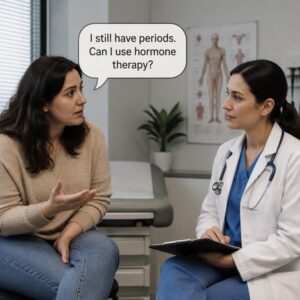
I still have periods. Can I use hormone therapy?

i still have periods. can i use hormone therapyPotentially, yes.

You do not necessarily have to wait until your period completely stops before discussing treatment for significant perimenopausal symptoms.

However, treatment during perimenopause can require more adjustment because your ovaries are still producing hormones.

Your own estradiol may surge while you’re also receiving treatment, which is another reason symptoms and bleeding patterns require careful follow-up.

Hormone therapy also does not function as contraception. Pregnancy can still occur during perimenopause.

Will hormones make me gain weight?

will hormones make me gain weightMidlife weight changes are complicated.

Hormonal changes may affect body composition, fat distribution, sleep, insulin sensitivity and the ability to maintain lean muscle. But hormones are only part of the equation.

We also look at:

  • Protein intake
  • Resistance training
  • Sleep
  • Alcohol
  • Stress
  • Thyroid function
  • Medications
  • Insulin resistance and metabolic health
  • Overall calorie and nutrient intake
  • Muscle mass

Our goal isn’t simply weight loss.

Our goal is metabolic health and preserving muscle as you age.


Why are protein and strength training so important?

Muscle becomes increasingly important as we age.

Resistance training combined with adequate protein helps support lean muscle mass, strength, metabolic health and healthy aging.

We encourage women to think beyond the scale.

You don’t simply want to weigh less at 55.

You want to be strong at 65, 75 and 85.

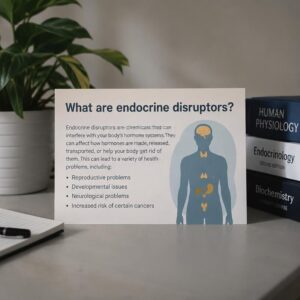
What are endocrine disruptors?

what are endocrine disruptorsYour hormones don’t exist in a vacuum.

We are exposed every day to chemicals in our environment, food packaging, plastics, cosmetics, personal-care products, household materials and other consumer products.

Some of these substances are known as endocrine-disrupting chemicals (EDCs) because they can interfere with normal hormone signaling.


Examples include certain:

  • Phthalates
  • Bisphenols such as BPA
  • PFAS
  • Pesticides
  • Flame retardants
  • Parabens and other chemicals used in some personal-care products

You cannot eliminate every exposure.

And we don’t want women living in fear of everything they touch.

The goal is reducing unnecessary exposure where practical.

Where are endocrine disruptors hiding?

how can i reduce endocrine disruptor exposurePotential sources can include:

Your kitchen: Plastic food containers, food packaging, canned or highly processed foods and certain nonstick materials.

Your bathroom: Fragranced personal-care products, some cosmetics, lotions, shampoos and other products.

Your closet: Some textiles and treated fabrics can contain chemicals of concern.

Your home: Dust, furniture, electronics, cleaning products and other household materials can contribute to exposure.

The fact that exposure is widespread doesn’t mean you need to throw everything in your house away tomorrow.

Start with the things you use every day.

How can I reduce endocrine-disruptor exposure?

how can i reduce endocrine disruptor exposureThink reduce, not “live in a bubble.”

Consider:

  • Don’t heat food in plastic.
  • Use glass or stainless steel for hot foods and beverages when practical.
  • Eat more whole foods and fewer heavily processed foods.
  • Wash fruits and vegetables.
  • Consider fragrance-free personal-care products.
  • Read ingredient labels on products you use every day.
  • Reduce unnecessary plastic food storage.
  • Replace heavily worn older nonstick cookware.
  • Vacuum and reduce household dust regularly.
  • Consider filtered drinking water based on your local water quality.
  • Don’t assume that “natural” automatically means safe.

Small changes repeated every day can significantly reduce unnecessary exposure over time.

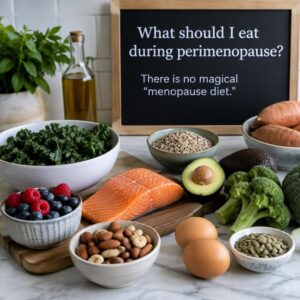
What should I eat during perimenopause?

There is no magical “menopause diet.

what should i eat during perimenopauseWe generally encourage a nutrient-dense diet built around:
Protein first. Eggs, fish, chicken, turkey, lean beef, Greek yogurt, cottage cheese and other protein-rich foods according to your individual needs and preferences.

Plants every day. Vegetables, berries and other whole fruits provide fiber and micronutrients.

Healthy fats. Olive oil, avocado, nuts, seeds and fatty fish can be incorporated into a balanced diet.

Fiber. Your gastrointestinal and metabolic health matter during this transition.

We generally recommend limiting excessive added sugar, ultra-processed foods and excessive alcohol.

You don’t need perfection.

You need consistency.

Do vitamins matter?

do vitamins matterSometimes supplements should have a reason.

Vitamin D, vitamin B12 and other nutrient deficiencies can contribute to symptoms that overlap with perimenopause, including fatigue and decreased wellbeing.

When clinically appropriate, we evaluate nutritional markers and replace deficiencies rather than automatically prescribing a cabinet full of supplements.

Test when appropriate. Supplement intentionally. Reassess.

Why am I suddenly waking up at 2 or 3 a.m.?

why am i suddenly waking up at 2 or 3 a.mSleep disruption is extremely common during the menopausal transition.

Hot flashes and night sweats can wake you, but sleep disturbance can occur even without obvious night sweats.

Hormonal changes aren’t the only possibility, either.

Alcohol, stress, sleep apnea, medications, thyroid dysfunction, anxiety, restless legs and other conditions can contribute.

We want to understand why you’re waking up, not simply prescribe something that makes you sleepy.

Why am I suddenly anxious?

why am i suddenly anxiousWomen who have never considered themselves anxious may notice significant mood changes during perimenopause.

Hormonal fluctuations can interact with neurotransmitter systems involved in mood, temperature regulation and sleep.

But new or severe anxiety should never automatically be blamed on hormones. Thyroid disease, medication effects, sleep deprivation and other medical or psychological conditions may need evaluation.

Why is my libido gone?

why is my libido goneSexual desire is complicated.

Hormones matter but so do sleep, stress, relationship factors, vaginal discomfort, medications, mental health and overall wellbeing.

Low libido deserves a real conversation rather than being dismissed as “just aging.”

Why is sex suddenly uncomfortable?

why is sex suddenly uncomfortableDeclining estrogen exposure can affect vulvar, vaginal and urinary tissues.

Women may experience:
• Vaginal dryness
• Burning
• Irritation
• Pain with intercourse
• Changes in sensation
• Recurrent urinary symptoms
• Urinary urgency
These symptoms are common and treatable. Depending on your situation, treatment may include vaginal moisturizers, lubricants, local vaginal hormone therapy or other therapies.
You don’t have to simply accept painful sex as part of getting older

What about irregular or heavy bleeding?

what about irregular or heavy bleedingCycle changes are common during perimenopause, but abnormal bleeding should not automatically be blamed on hormones.

Depending on your age, bleeding pattern and risk factors, further evaluation may be necessary.
Contact your healthcare provider for new heavy bleeding, persistent bleeding, bleeding after intercourse or other significant changes.

Any bleeding after menopause requires medical evaluation.

When should I seek urgent medical attention?

when should i seek urgent medical attentionHormones should never be used to explain away potentially serious symptoms.

Seek prompt or emergency evaluation for symptoms such as:

  • Chest pain
  • Significant shortness of breath
  • Coughing up blood
  • New one-sided leg swelling or pain
  • Sudden severe headache
  • New neurological symptoms
  • Fainting
  • Severe or uncontrolled vaginal bleeding

How long will perimenopause last?

how long will perimenopause lastThere isn’t one timeline.

For some women, the transition is relatively short. For others, symptoms and cycle changes occur over several years.

Eventually, ovarian estrogen production declines enough that menstrual periods stop.

Once you’ve gone 12 consecutive months without a menstrual period, you have reached menopause.

Do I have to suffer until menopause?

do i have to suffer until menopauseNo.

Perimenopause isn’t something you simply have to “push through.”

There are hormonal and nonhormonal treatment options, and the right approach depends on your symptoms, health history, risk factors and goals.

Sometimes treatment means hormone therapy.

Sometimes it means improving sleep, nutrition, strength training or metabolic health.

Sometimes we discover thyroid dysfunction, nutrient deficiency or another condition contributing to the symptoms.

Frequently, the answer is a combination.

THE HOUSE OF HORMONES APPROACH

At House of Hormones & Weight Loss, we don’t believe women’s health should be reduced to:

“Your labs are normal.”

We look at the entire picture.

Symptoms + history + appropriate laboratory testing + lifestyle + risk factors + clinical response.

For patients receiving hormone therapy, we typically reassess laboratory markers approximately twice yearly, with additional monitoring when clinically indicated.

We may evaluate and address progesterone, estrogen, testosterone, DHEA-S, thyroid function, vitamin D, B vitamins and other health markers depending on the individual.

But our goal isn’t to chase numbers.

Our goal is to help you understand what is happening inside your body, determine which symptoms may be related to perimenopause, identify other conditions that shouldn’t be overlooked and develop an individualized plan for the years ahead.

You are not supposed to feel exactly the same at 45 as you did at 25.

But you also shouldn’t be told that feeling exhausted, sleepless, uncomfortable and unlike yourself is simply the price of getting older.

Perimenopause is a transition. Let’s understand it—and treat the woman going through it.

This information is provided for educational purposes and does not replace individualized medical evaluation or treatment. Hormone therapy and supplementation are not appropriate for every patient. Treatment recommendations are based on individual symptoms, medical history, risk factors, examination when indicated and appropriate laboratory or diagnostic testing.